Ulrich Lehmann · 6 October 2026
How Volunteer-Led Soil Remediation Projects Are Altering Microclimates Around Former Industrial Waterways
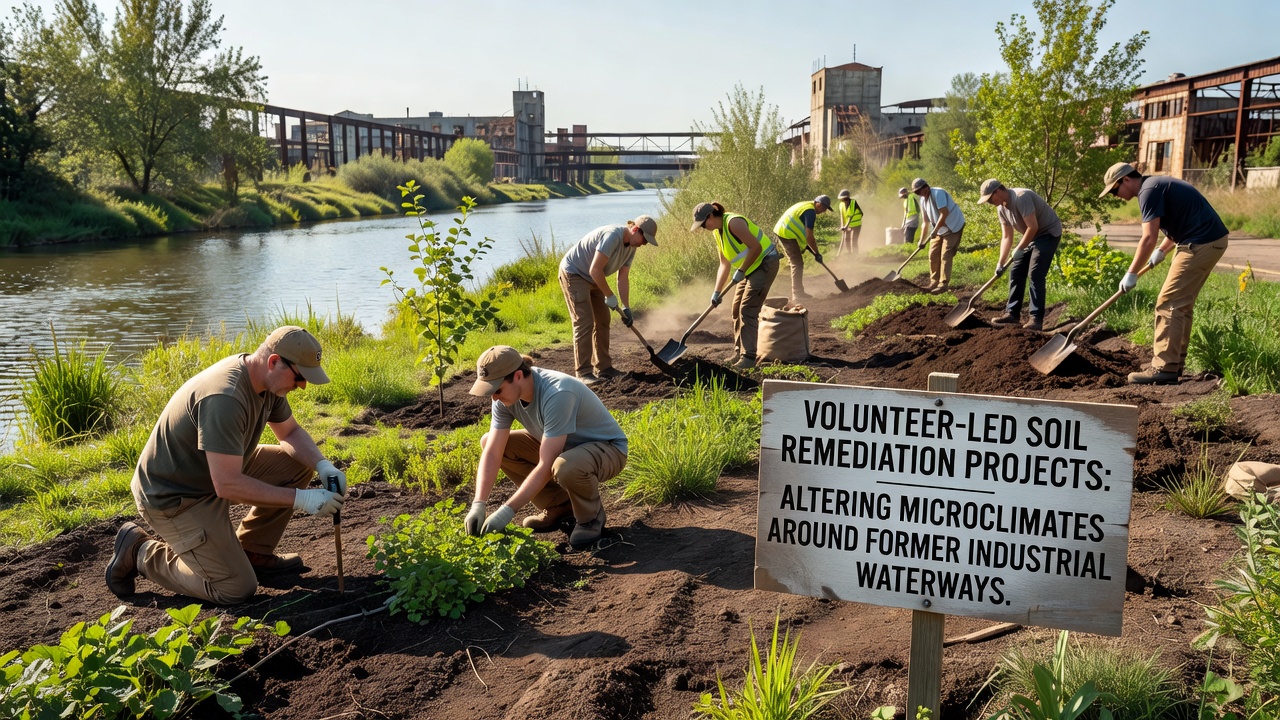
Volunteer-led soil remediation projects along former industrial waterways have expanded in recent years as communities address legacy contamination from manufacturing and shipping activities, and these efforts produce measurable changes in local temperature, humidity, and wind patterns through vegetation establishment and soil structure improvements.
Teams remove heavy metals and hydrocarbons from riverbank soils while adding organic amendments that support plant growth, and this combination creates conditions where evapotranspiration rates increase and surface albedo decreases in targeted zones. Data collected from multiple sites show average daytime temperature reductions of 1.2 to 2.8 degrees Celsius within 50 meters of treated areas during summer months, according to monitoring programs coordinated by regional environmental agencies.
Project Methods and Geographic Spread
Groups in North American and European cities coordinate weekend cleanups that include soil testing, phytoremediation planting, and erosion control structures, and these activities occur on parcels previously used for chemical storage or barge maintenance. In October 2026 several programs along the Great Lakes and Rhine tributaries reported completion of three-year monitoring cycles that tracked microclimate variables before and after intervention. Researchers documented shifts in soil moisture retention that extended into adjacent air layers, producing higher relative humidity readings during dry periods.
Organizations apply biochar and compost mixtures to bind remaining contaminants while improving water-holding capacity, and native grasses and shrubs take root more successfully under these conditions. The resulting canopy cover reduces solar radiation reaching the ground surface, which lowers heat absorption during peak hours and releases moisture through transpiration cycles.
Observed Microclimate Changes
Continuous sensor networks installed at remediation sites record nighttime temperature moderation of 0.8 to 1.5 degrees Celsius compared with untreated control sections, and wind speed measurements indicate reduced gusts near dense plantings because vegetation acts as a barrier. These patterns emerge within 18 to 24 months after initial planting, according to datasets shared by university extension services in the Midwest and Pacific Northwest.
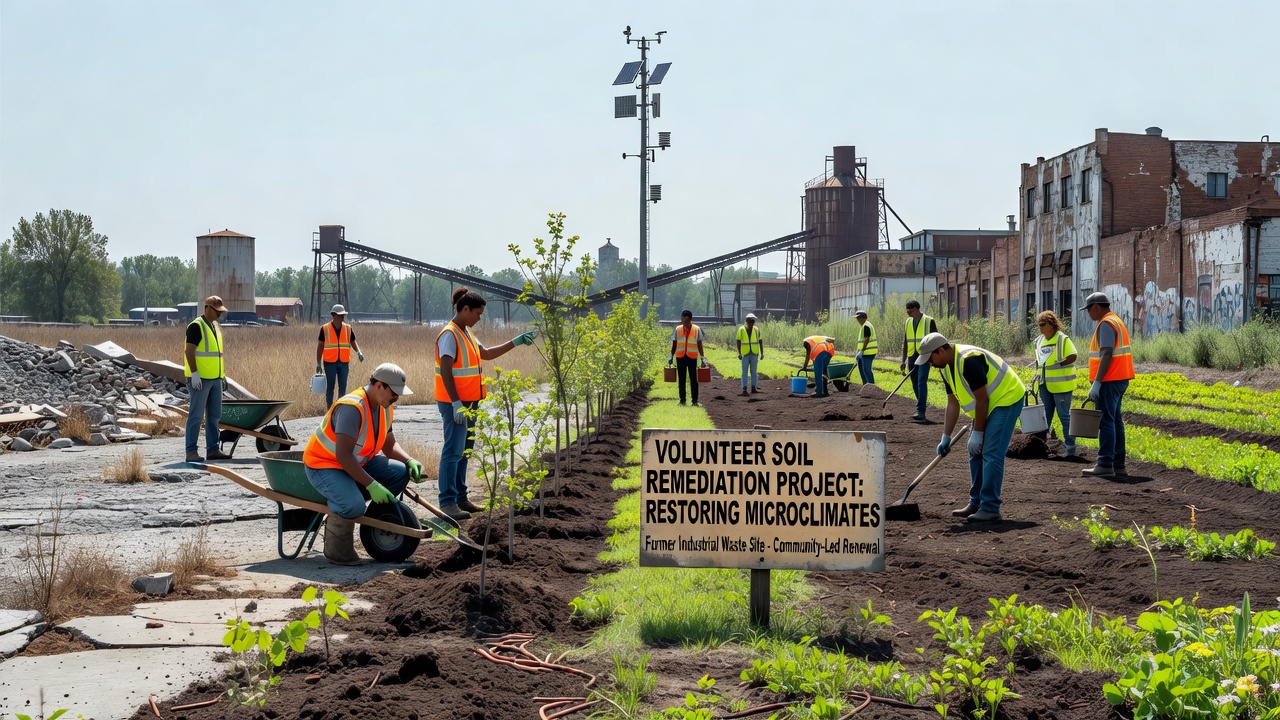
Evapotranspiration from established vegetation contributes additional atmospheric moisture that interacts with prevailing winds along linear waterway corridors, and this process can extend cooling effects several hundred meters downstream. Soil bulk density decreases after amendment applications, allowing deeper root penetration that sustains plant cover through seasonal droughts and maintains the microclimate benefits year-round.
Data Collection and Partnerships
Citizen scientists upload weekly readings from handheld devices to centralized databases managed by environmental nonprofits, and these records supplement professional meteorological stations operated by government bodies. EPA brownfield reports document temperature and vegetation correlations at multiple legacy sites, while comparable figures from the European Environment Agency track humidity increases near remediated port areas in northern Europe. Cross-referencing of these sources reveals consistent patterns across different climate zones and industrial histories.
Long-term plots established in 2023 continue to yield information on how remediation scale influences the magnitude of microclimate alteration, and larger treated sections produce more pronounced effects than smaller patches because contiguous vegetation creates stronger feedback loops with local air movement.
Conclusion
Volunteer coordination of soil remediation along former industrial waterways generates documented microclimate modifications through combined contaminant removal, soil amendment, and vegetation establishment, and ongoing sensor networks provide quantitative evidence of temperature moderation and humidity increases. These outcomes appear in project reports from multiple regions and continue to inform planning for additional sites in 2026 and beyond.