Morgan Richter · 20 October 2026
How Seasonal Water Level Fluctuations Impact Public Art Durability in Urban Waterfront Areas
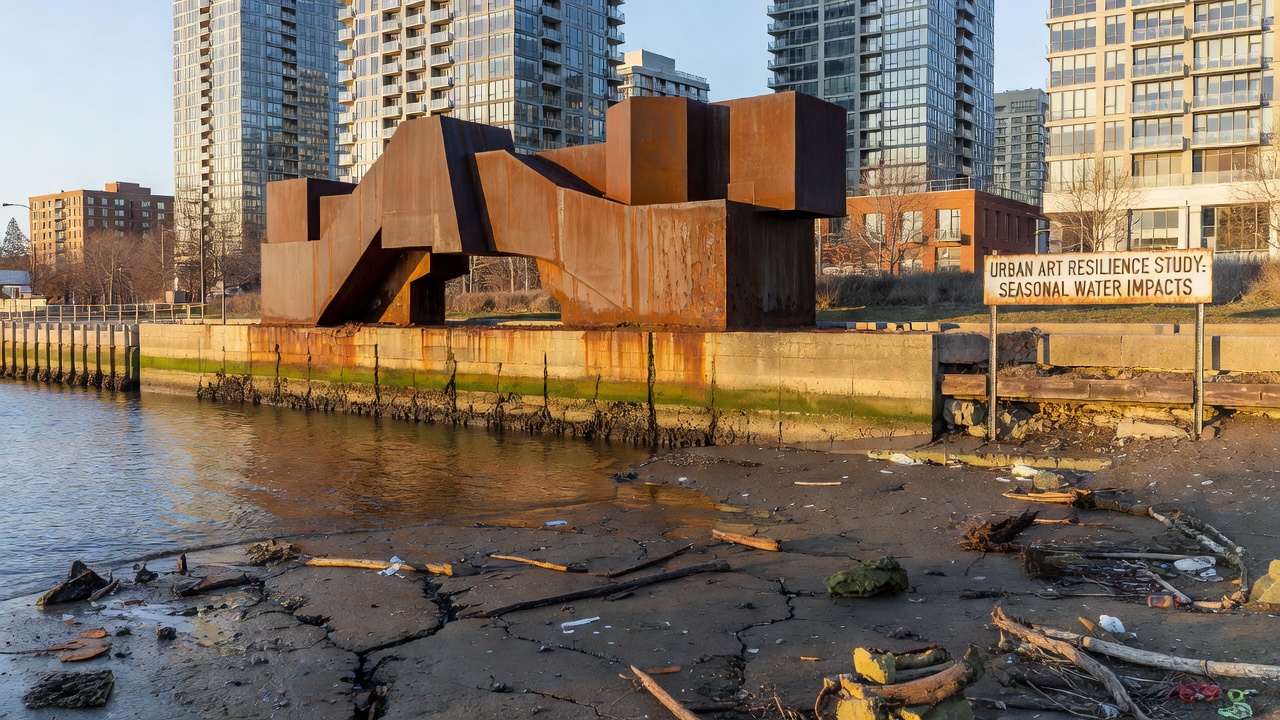
Urban shorelines host numerous public art installations that face constant exposure to shifting water levels driven by seasonal cycles, precipitation patterns, and climate influences, and these changes create repeated cycles of submersion and exposure that accelerate wear on materials ranging from metals to stone and composites. Data from monitoring stations indicate that water levels in many rivers and lakes can vary by several feet between spring highs and fall lows, which places art pieces at different elevations in direct contact with moisture, sediments, and dissolved salts during peak periods.
Mechanics Behind Seasonal Variations
Seasonal fluctuations occur when snowmelt and rainfall push water volumes higher in spring while evaporation and reduced inflows lower them in summer and fall, and researchers tracking these patterns through gauge networks have documented consistent annual ranges in locations such as the Great Lakes and major river systems. In October 2026, several monitoring programs reported mid-autumn levels dropping below long-term averages in multiple basins, which extended the dry exposure period for lower portions of shoreline sculptures and bases. This rhythm subjects installations to alternating forces of hydrostatic pressure during high water and air-drying cycles during lows, conditions that promote micro-cracking in porous materials and initiate corrosion pathways in metals.
Material Degradation Processes
Metals in public art experience accelerated oxidation when water levels rise and carry electrolytes from urban runoff, while stone and concrete suffer from freeze-thaw expansion in colder months when saturated zones remain above the lowered water table. Studies from academic teams have measured chloride penetration rates in waterfront concrete that increase by up to 40 percent during prolonged high-water seasons, and similar observations apply to bronze and steel components where protective patinas break down under repeated wetting and drying. Observers note that composite materials, often chosen for their perceived resilience, still develop delamination at joints when sediment abrasion occurs during fluctuating flows that carry suspended particles against surfaces.
Physical stressors compound these chemical effects because wave action and ice movement intensify during transitional seasons, and data collected along developed waterfronts show that installations positioned between mean high and low water marks sustain the greatest cumulative damage over five- to ten-year periods. Those who've examined recovered fragments from older pieces report pitting depths that correlate directly with the number of annual inundation cycles rather than simple calendar age.
Documented Cases Across Regions
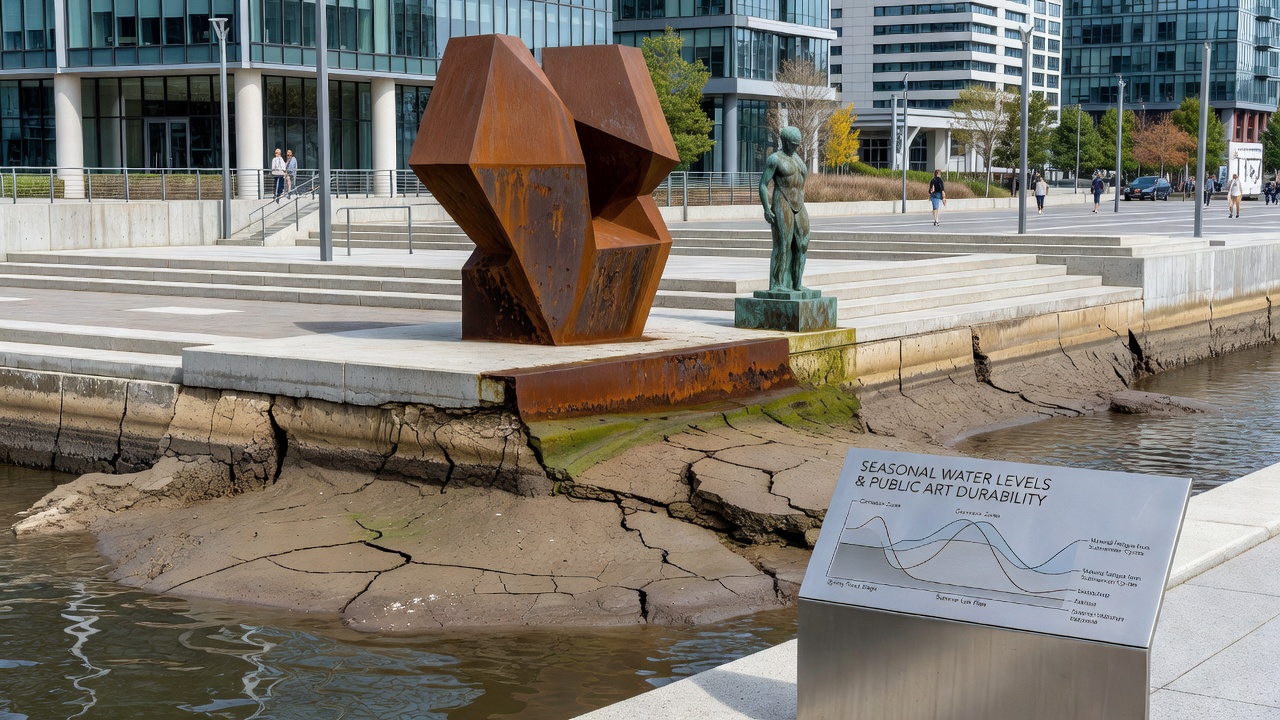
Along the Chicago Riverwalk, multiple steel and resin installations installed in the early 2010s have required surface treatments within eight years because repeated spring flooding introduced de-icing salts that remained trapped during subsequent low-water evaporation phases. Similar patterns appear in European cities where European Environment Agency reports link higher seasonal amplitudes in regulated waterways to faster surface loss on limestone sculptures. In Canadian waterfront parks, teams from Environment and Climate Change Canada have recorded biological colonization by algae and barnacles that thrive in the intertidal band created by fluctuating levels, and these organisms retain moisture against substrates long after water recedes, extending the duration of corrosive contact.
What's interesting is how placement elevation influences outcomes, because pieces anchored above the typical high-water line experience primarily atmospheric weathering while those lower down encounter full submersion cycles that introduce both chemical and mechanical attack. One study revealed that repositioning bases by even 18 inches reduced measured corrosion rates measurably within three seasons, although such adjustments remain rare due to original design constraints and permitting requirements.
Monitoring and Mitigation Approaches
Current practices include installing sacrificial anodes on metal works, applying hydrophobic coatings rated for repeated immersion, and embedding sensors that track moisture content and temperature gradients in real time. Data from the United States Geological Survey gauge networks now feed into predictive models that forecast exposure windows for specific shoreline segments, allowing maintenance crews to schedule interventions before visible damage escalates. In some municipalities, modular mounting systems permit seasonal raising or lowering of lighter sculptures, a tactic that has preserved several fiberglass and resin pieces through multiple cycles without permanent relocation.
Longer-term strategies involve selecting materials with documented performance under cyclic wetting, such as marine-grade stainless steels or granite varieties tested for salt resistance, and integrating drainage channels that limit ponding when levels drop. Researchers continue to compile datasets that correlate water-level hydrographs with material loss metrics, and these records support revised siting guidelines for new installations planned along urban edges.
Conclusion
Seasonal water level fluctuations impose predictable yet cumulative stresses on public art along urban shorelines through repeated exposure to moisture, salts, sediments, and temperature swings, and evidence from gauge records and material analyses demonstrates clear links between fluctuation amplitude and degradation speed. Cities that incorporate elevation-aware design, protective treatments, and ongoing sensor data achieve longer service life for these cultural assets, while those that overlook the seasonal pattern face earlier replacement cycles. Continued collection of hydrographic and durability measurements will refine placement and maintenance protocols as water regimes evolve.